


Ghani Machine Price in India: Types, Cost & Complete Buying Guide
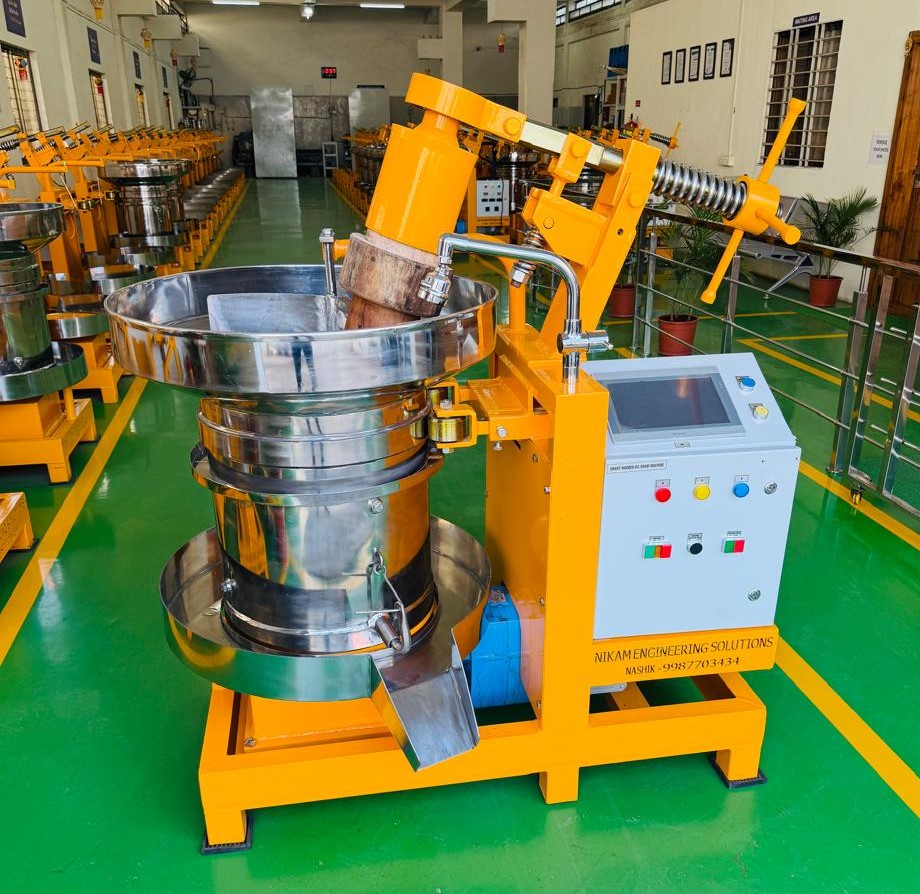
Looking for the right ghani machine price before starting your cold pressed oil business? You are in the right place. Whether you want a wooden oil ghani machine for a small shop or a fully automated unit for large-scale production, understanding the cost, types, and features is the first step towards a smart investment.
In this complete guide by Nikam Engineering — one of India's leading wooden oil ghani machine manufacturers — we cover everything you need to know — from how a ghani machine works, what affects the price, and the different types available, to choosing the best machine for your business needs. If you are searching for the ghani machine price in India, read on for a clear, no-nonsense breakdown.
What Is a Ghani Machine?
A ghani machine is an oil extraction machine rooted in India's centuries-old tradition of cold pressing oilseeds. The word “ghani” comes from the Hindi term for the traditional wooden mortar-and-pestle setup that was once powered by bullocks to crush seeds and extract pure, unrefined oil. To understand the deep heritage behind this machinery, you can explore the history of wooden oil ghani machines.
Today, modern wooden oil ghani machines use electric motors instead of animal power, but the core principle remains the same — slow, low-temperature crushing that preserves the natural taste, aroma, and nutritional value of the oil. Unlike refinery methods that use chemicals and high heat, a ghani machine produces kachi ghani (raw, cold pressed) oil that retains vitamins, antioxidants, and essential fatty acids.
This is exactly why the demand for ghani oil and cold pressed oil machines has grown rapidly across India. Health-conscious consumers are willing to pay a premium for chemical-free, wood-pressed oil, making it a profitable business opportunity for entrepreneurs.
How Does a Ghani Machine Work?
Understanding how a ghani machine works helps you appreciate why the oil it produces commands a higher market price.
The Step-by-Step Process
- Loading the Seeds: Oilseeds such as groundnut, sesame, mustard, coconut, or flaxseed are fed into the wooden mortar (the main crushing chamber).
- Slow Crushing: A heavy wooden pestle rotates inside the mortar at a very low speed, typically around 15–20 RPM. This slow rotation generates minimal heat, which is the hallmark of cold pressing.
- Oil Separation: As the pestle crushes the seeds, oil is gradually released and collected in a stainless steel tray placed below the mortar.
- Cake Removal: After the oil is extracted, the remaining dry residue (called oil cake or khali) is removed. This cake is often sold separately as animal feed or organic fertiliser.
- Filtering (Optional): Some advanced machines include a temperature control system and oil filtering mechanism for cleaner output.
The entire batch process typically takes around 25 to 40 minutes depending on the seed type and machine model. Because the temperature stays low throughout, the oil retains its original colour, flavour, and health benefits — this is what makes cold press ghani machine oil different from refined oil.Every machine manufactured at Nikam Engineering's state-of-the-art infrastructure is built to deliver this level of precision consistently.
Ghani Machine Price in India: What Does It Cost?
The ghani machine price in India is not a single fixed number. It varies based on several important factors. Here is what determines how much you will pay.
Key Factors That Affect Ghani Machine Price
- Machine Type and Model: Basic manual-feed models cost less than smart or fully automated models with PLC controls, HMI touchscreens, and sensor-based monitoring.
- Construction and Materials: Machines built with high-quality wood (such as Acacia/Babul wood for the mortar), food-grade stainless steel (SS 304) oil trays, and premium-brand components naturally command a higher price.
- Motor Power and Brand: A 3 HP single-phase motor setup differs in cost from a 5 HP three-phase industrial motor. Reputed motor brands like Siemens add to durability and price.
- Capacity and Throughput: Machines designed for higher per-hour output or continuous 20-hour operation are priced higher than entry-level models.
- Automation Level: Features such as VFD (Variable Frequency Drive) for energy savings, PLC-based auto programming for multiple seed types, RPM meters, temperature sensors, batch timers, and HMI display screens significantly influence cost.
- Bearings, Gearbox, and Hardware: Industrial-grade components from brands like SKF, FAG, Danfoss, Omron, and Siemens increase the machine's reliability and its price.
- Customisation: Tailor-made configurations to suit specific seeds, production volumes, or space constraints can affect the final quotation.
So, What Is the Approximate Price Range?
Because the price depends on all the factors listed above, it is difficult to state a single figure. However, as a general benchmark, the ghani machine price in India typically falls in the range of ₹2,50,000 to ₹3,80,000 (approximately ₹2.5 lakh to ₹3.8 lakh) depending on the model, automation level, and configuration you choose. A basic wooden oil ghani machine without advanced electronics will be closer to the lower end of this range, while a fully automated advanced model with HMI touchscreen, Danfoss VFD, PLC, and sensor-based monitoring will be towards the higher end.
Keep in mind that the final price may also vary based on customisation, motor selection, and any additional accessories or installation requirements. The best approach is to request a customised quotation directly from the manufacturer based on your specific requirements — your target oilseeds, desired capacity, automation preferences, and budget.
Pro Tip: Contact Nikam Engineering to get a detailed, requirement-specific quotation for your ghani machine. Their team will help you choose the right model and configuration at the best value.
Wooden Ghani Machine Price: Why Wood Matters
Among all types of oil ghani machines, the wooden ghani machine holds a special place in the market. Here is why.
Why Buyers Prefer Wooden Ghani Machines
- Authentic Taste: Wood does not react chemically with oilseeds. The oil retains its natural, earthy flavour — the same taste that made “kachi ghani tel” famous across India.
- No Metal Contamination: Unlike fully metallic expellers, wooden mortar-and-pestle systems do not leach metal particles into the oil.
- Low Heat Generation: Wood is a poor conductor of heat, so temperatures remain naturally low during pressing. This protects the nutrients and antioxidants in the oil.
- Consumer Trust: “Wood-pressed oil” is a strong marketing differentiator. Customers associate it with purity, tradition, and health. Machines built with certified quality standards further strengthen buyer confidence.
What Affects Wooden Ghani Machine Price?
The wooden ghani machine price depends on the type of wood used (Acacia/Babul wood is most common), the overall build quality, the motor and control panel specifications, and whether the machine includes automation features. Prices generally range between ₹2,50,000 and ₹3,80,000. A basic wooden oil ghani machine without automation will fall towards the lower end of this range, while a smart or advanced model equipped with sensors, VFD, PLC, and an HMI touchscreen will be priced towards the higher end.
Types of Ghani Machines
Not all ghani machines are the same. Depending on your budget, production volume, and automation needs, you can choose from several types.
Comparison Table: Types of Ghani Machines
| Feature | Basic Wooden Ghani | Standard Wooden Ghani | Smart Wooden Ghani | Advanced Wooden Ghani |
|---|---|---|---|---|
| Motor | Siemens | Siemens | Siemens | Siemens |
| Power Supply | Single Phase 3 HP / Three Phase 5 HP | Single Phase 3 HP / Three Phase 5 HP | Single Phase 3 HP / Three Phase 5 HP | Single Phase 3 HP / Three Phase 5 HP |
| Oil Yield | 48–85% | 48–85% | 48–85% | 48–85% |
| Oil Tray Material | Jindal SS 304 | Jindal SS 304 | Jindal SS 304 | Jindal SS 304 |
| Bearings | SKF / FAG | SKF / FAG | SKF / FAG | SKF / FAG |
| VFD | No | Yes | Yes | Yes (Danfoss) |
| PLC | No | Yes (Wycom/Omron) | Yes (Wycom/Omron) | Yes (Wycom/Omron) |
| Enclosure | No | Rittal Cabinet | Rittal Cabinet | Rittal Cabinet |
| HMI Touchscreen | No | No | No | Yes (10-inch) |
| Temp & RPM Sensors | No | No | Yes | Yes |
| Auto Seed Programs | No | No | No | Yes (10 programs) |
| Batch Timer | No | No | Yes | Yes (on HMI) |
| Best For | Small startups, low budget | Growing businesses | Quality-focused production | Large-scale, fully automated operations |
Quick Overview of Each Type
- Basic Wooden Oil Ghani Machine: An entry-level model with reliable Siemens motor, SKF/FAG bearings, and SS 304 oil tray. Ideal for first-time entrepreneurs who want a dependable machine without advanced electronics.
- Standard Wooden Oil Ghani Machine: Adds a VFD for energy savings, PLC for programmable control, and a Rittal cabinet enclosure. A good middle-ground option for small to medium businesses.
- Smart Wooden Oil Ghani Machine: Includes temperature sensors, RPM monitoring, batch timers, and a water flush counter — all features that help maintain consistent oil quality across every batch.
- Advanced Wooden Oil Ghani Machine: The top-of-the-line model with a 10-inch HMI touchscreen, Danfoss VFD, Omron PLC, and 10 pre-set oil seed programs. Once the operator selects a seed type on the screen, the machine automatically controls the entire crushing process. This is the best option for large-scale, commercial ghani machine operations that demand consistency and minimal manual intervention. . You can see all four models in action in the Nikam Engineering gallery.
Ghani Machine vs Cold Press Oil Machine: What Is the Difference?
Many buyers confuse a ghani machine with a cold press oil machine. While both produce cold pressed oil, they differ in design and operation.
Key Differences
| Parameter | Wooden Ghani Machine | Screw-Type Cold Press Machine |
|---|---|---|
| Extraction Method | Wooden mortar and pestle (crushing) | Metal screw/expeller (pressing) |
| Temperature | Very low (wood insulates naturally) | Low, but slightly higher than ghani |
| Oil Flavour | Authentic, traditional, earthy | Clean, neutral |
| Material Contact | Wood + SS 304 steel | Mostly metal |
| Speed (RPM) | Very slow (15–20 RPM) | Moderate |
| Market Positioning | Premium “kachi ghani” / “wood-pressed” oil | Premium “cold pressed” oil |
| Consumer Appeal | Strong in traditional and Ayurvedic markets | Broad health-conscious audience |
Both types of machines have their place. If your target market values traditional, wood-pressed oil, a wooden oil ghani machine is the right choice. If you want to process larger volumes across many seed types with a single machine, a screw-type cold press oil machine may be more suitable. Many successful entrepreneurs use both — a ghani machine for premium wood-pressed oils and a cold press expeller for bulk production.
Oilseeds Suitable for Ghani Machines
One of the biggest advantages of a ghani machine is its versatility. You can extract oil from a wide variety of seeds, including:
- Groundnut (Peanut) — One of the most popular seeds for ghani oil, especially in Maharashtra, Gujarat, and Rajasthan.
- Sesame (Til) — Produces high-value gingelly oil used in cooking, temples, and Ayurveda.
- Mustard (Sarson) — The iconic “kachi ghani sarson ka tel” of North India.
- Coconut (Copra) — Wood-pressed coconut oil is prized in South India and Kerala.
- Flaxseed (Alsi) — A superfood oil rich in Omega-3 fatty acids.
- Safflower (Kardai) — Popular in Maharashtra for its light cooking oil.
- Sunflower — A widely consumed, heart-healthy cooking oil.
- Almond and Walnut — Premium speciality oils with high margins.
- Castor — Used in industrial and medicinal applications.
The ability to process multiple seed types on a single machine gives entrepreneurs flexibility to serve diverse customer needs and seasonal demand.
Ghani Machine for Commercial Oil Production
If you are planning to start or scale a cold pressed oil business, investing in the right commercial ghani machine is critical.
Why Commercial Ghani Machines Are a Smart Business Investment
- High Consumer Demand: The demand for chemical-free, wood-pressed oil is growing rapidly in India and globally. Consumers are increasingly switching from refined oil to cold pressed alternatives.
- Premium Pricing: Wood-pressed ghani oil typically sells at 2x to 3x the price of refined oil, giving you healthy profit margins.
- Low Operating Cost: Ghani machines consume relatively low power (typically 2–3 units per hour) and require minimal maintenance, keeping your running costs down.
- Multiple Revenue Streams: You earn from oil sales, oil cake (khali) sales, and potentially from offering custom pressing services to farmers and local customers.
Scaling Your Production
For commercial use, consider machines with automation features — VFD for energy savings, PLC for programmable operation, and temperature/RPM sensors for quality consistency. The Advanced Wooden Oil Ghani Machine from Nikam Engineering is designed specifically for commercial-scale entrepreneurs who want high throughput with minimal manual oversight. Watch real machine demonstrations and customer installations on the Nikam Engineering YouTube channel.
How to Choose the Right Ghani Machine
With several models available, picking the right oil ghani machine can feel overwhelming. Use this simple checklist.
Your Buying Checklist
- Define Your Purpose: Are you starting a small home-based operation, or setting up a commercial oil mill? Your volume requirement determines the model and capacity you need.
- Choose Your Seeds: Some seeds are harder to press than others. Ensure the machine you select is designed to handle your primary oilseeds efficiently.
- Set Your Budget: Start with a clear budget range, but think beyond just the purchase price. Factor in electricity costs, maintenance, spare parts availability, and potential output revenue.
- Evaluate Automation Needs: If you plan to run multiple batches with different seeds, automation features like PLC seed programs, HMI displays, and sensor-based monitoring will save time and improve consistency.
- Check Material and Build Quality: Look for food-grade SS 304 oil trays, industrial-grade bearings (SKF/FAG), reputed motor brands (Siemens), and robust gearboxes. These components determine how long your machine will last.
- Ask About After-Sales Support: A machine is only as good as the support behind it. Prioritise manufacturers who offer installation training, maintenance guidance, and readily available spare parts.
- Visit the Factory (If Possible): Seeing the manufacturing facility firsthand gives you confidence in the build quality and the company's capabilities. Learn more about why entrepreneurs choose Nikam Engineering over other manufacturers.
Machine Price vs Long-Term Business Value
It is tempting to choose the cheapest ghani machine available, but the lowest oil ghani machine price does not always mean the best deal.
Think in Terms of Total Cost of Ownership
Cheap machines may use low-quality bearings, generic motors, and inferior wood. These break down sooner, need frequent repairs, and produce inconsistent oil quality — all of which eat into your profits over time.
Well-built machines from reputed manufacturers use industrial-grade components that last for years. They run smoothly, consume less power (especially with VFD), and deliver consistent oil yield — maximising your return on investment.
A Simple Way to Think About It
If a higher-quality machine produces even 5–10% more oil per batch, runs for 3–5 more years without major repairs, and saves energy through VFD, the extra upfront cost pays for itself many times over. When evaluating the ghani machine price, always calculate the long-term business value, not just the day-one expenditure.
Why Choose Nikam Engineering for Your Ghani Machine?
When it comes to buying a wooden oil ghani machine, choosing the right manufacturer is just as important as choosing the right model. Here is why over 6,500 entrepreneurs across India and internationally trust Nikam Engineering.
What Sets Nikam Engineering Apart
- 14+ Years of Experience: Over a decade of hands-on expertise in manufacturing wooden oil ghani machines and cold press oil machinery.
- ISO 9001:2015 Certified: Quality management systems that ensure every machine meets strict standards.
- FSSAI-Compliant Design: All machines are engineered as per FSSAI food safety norms, giving you regulatory confidence.
- 6,500+ Machines Delivered: A proven track record with thousands of satisfied customers across 23+ Indian states.
- Global Presence: Machines supplied to customers in the United States, Europe (Italy, Netherlands), South Africa, Uzbekistan, Russia, and the Middle East.
- Food-Grade Components: Jindal SS 304 oil trays, SKF/FAG bearings, Siemens motors, Danfoss VFD, Omron PLC, and Rittal enclosures — all internationally recognised brands.
- 0% Maintenance Claim: Heavy-duty construction engineered for durability and minimal downtime.
- Customisation: Machines can be tailored to your specific seed types, production capacity, and operational requirements. This aligns with Nikam Engineering's core objective of empowering small-scale industries with reliable machinery.
- After-Sales Support: Dedicated service team for installation, operator training, maintenance guidance, and spare parts supply.
- Factory Location: Plot No. 18/P1, MIDC Satpur, Nashik, Maharashtra — open for customer visits and live demonstrations. Meet the leadership team driving innovation at Nikam Engineering.
Whether you are a first-time entrepreneur or an established oil mill owner looking to upgrade, Nikam Engineering has a model and configuration to match your needs and budget.
Explore the full product range: Nikam Engineering — Oil Ghani Machine
Ready to Start Your Cold Pressed Oil Business?
The right ghani machine can transform your business. Whether you need a basic entry-level unit or a fully automated advanced machine, the first step is getting a quotation tailored to your exact needs.
Contact Nikam Engineering today to get the latest ghani machine price based on your requirements — capacity, seed type, automation level, and budget.
📞 Phone: +91 9987703434 | +91 9090273434
📧 Email: sales@nikamengineering.com
🏭 Factory: Plot No. 18/P/1, MIDC Satpur, Nashik 422007, Maharashtra
🌐 Website: https://nikamengineering.com/